
One Simple Strategy To Accelerating Rebuilding in Pacific Palisades with Group Permits
As we all know In 2025, the Palisades Fire devastated Pacific Palisades, reducing thousands of homes to rubble and presenting a daunting recovery challenge. By April 2025, only a few rebuilding permits had been approved by the Los Angeles Department of Building and Safety, leaving residents stuck in a bureaucratic standstill, despite promises of a fast process of accessing these permits. However, a new strategy is gaining popularity: what if neighbors united, combining their resources under a single developer to obtain group permits and rebuild more swiftly? This creative solution could bypass red tape, expedite home restoration, and serve as a model for other fire-affected zones.
Permit Challenges in Pacific Palisades
The scope of damage from the Palisades Fire, which burned over 23,000 acres and obliterated around 7,000 buildings, has overwhelmed local agencies. Despite executive orders from Governor Gavin Newsom to fast-track permits by waiving requirements like California Environmental Quality Act checks, the city has only issued four permits in three months. Homeowners have encountered delays exceeding 75 days; furthermore, the situation was complicated by labor shortages, high material costs (averaging $500 per square foot), and strict new fire safety standards that require non-flammable materials and defensible spaces.
Frustration is widespread. Residents’ anger over the slow process is evident in posts on X, prompting some to form volunteer fire brigades to protect what remains while permits are pending. Mayor Karen Bass has promised to streamline operations, but the city’s $1 billion budget deficit and insufficient staffing pose challenges that make it difficult to deliver on her promises. For Pacific Palisades—a prosperous, close-knit community—the delay feels deeply personal, undermining their resilience.
A Community-Driven Approach: Collective Contracts with One Developer
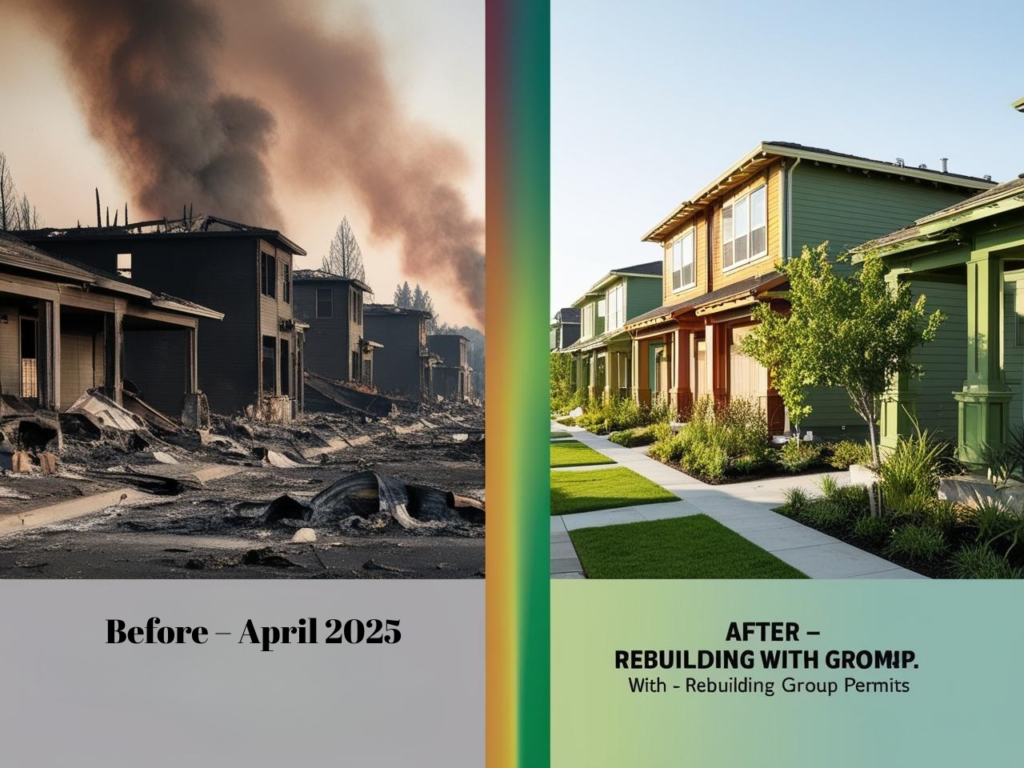
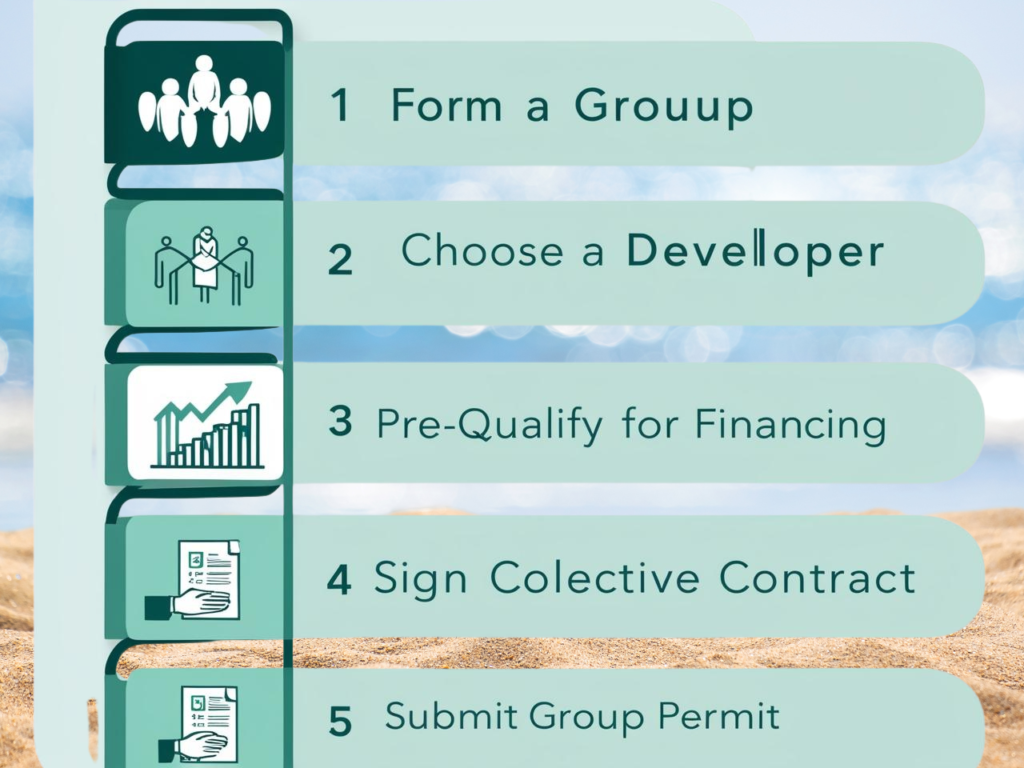
A promising remedy has emerged: small groups of homeowners, possibly 10 to 20 neighbors, joining forces to hire a single developer through a collective contract. Instead of each household tackling the permit labyrinth alone, the developer submits one application for all properties, reducing paperwork and wait times. Here’s how it functions:
Unified Permitting: The developer files a master permit similar to a small housing project. This utilizes Newsom’s 30-day permit mandate for fire recovery, sidestepping discretionary reviews. The project has successfully completed one set of blueprints, one environmental evaluation, and one approval.
Transparent Agreements: Homeowners then sign a contract detailing agreed-upon designs, timelines, and costs after they have pre-qualified for financing so that the contract can reflect what they are able to afford. The developer oversees permitting, inspections, and construction while owners retain their land, avoiding the risks of deed transfers. Clauses ensure homes meet or exceed pre-fire standards, maintain the Palisades’ unique character and high value, and all obtain home insurance pre-approval.
Developers Secure Financing: With all homeowners prequalified to pay for the built home, developers can access quick financing either through their banks or private capital, as this endeavor could be set up as a project finance model with the prequalified owners being the off-takers.
Advantages in Cost and Speed: Developers can secure bulk discounts on materials and coordinate labor effectively for 10–20 homes, a manageable scale compared to rebuilding thousands at once. Group applications receive priority, as cities like LA are eager to demonstrate progress.
This concept is not theoretical; it reflects how planned communities or condominium projects can fast-track approvals. For Pacific Palisades, it offers a practical way to convert neighborly cooperation into tangible progress to rebuild as fast as possible. This approach can be applied by multiple developers taking on 10-20 homes each to initiate massive scale rebuilding projects as opposed to having everyone that lost their home requesting a permit approval
Why This Works for Pacific Palisades
This collective approach aligns with the community’s spirit. Pacific Palisades residents are known for their teamwork, from fundraisers to fire safety initiatives. A cluster of 10–20 homes is small enough to foster trust—neighbors are likely familiar with each other—but large enough to ease the city’s workload. Unlike a single builder managing the entire area—a logistical challenge—this scales down the plan while increasing effectiveness.
The data clearly illustrates the situation. If one group permit takes 30–45 days instead of over 75 per home, 20 families could commence rebuilding in half the time. Developers also benefit: a secured batch of projects guarantees continuous work in a competitive market. Additionally, the city, pressured to recover swiftly, is more inclined to expedite a unified proposal over scattered individual submissions.
Hurdles to Overcome And Rebuild Pacific Palisades

No strategy is flawless. Homeowners must agree with a developer, aligning prices, designs, and timelines. In an upscale area like Pacific Palisades, where custom homes are prevalent, some may resist uniform designs. Selecting a reliable developer is crucial—poor-quality work or delays could ruin the benefits. A robust, legally reviewed contract is essential to protect all parties.
The city’s involvement is another uncertainty. Even with group permits, if staffing doesn’t improve, inspections and final approvals may be delayed. Developers must proactively submit fire safety-compliant plans to avoid needing modifications. Community engagement depends on openness—regular updates from both the developer and the city can help maintain trust.
A Model for Fire Recovery
Pacific Palisades is not the only area where the group permit strategy is applicable. Communities affected by the Eaton Fire in Altadena or other 2025 wildfires could adapt this approach. It symbolizes resilience: turning shared adversity into collective strength. It might result in the rebuilding of homes in Pacific Palisades by late 2025, rather than 2027.
To implement this, residents should start small. Gather 10–20 neighbors, research developers experienced in fire recovery, and draft a contract prioritizing efficiency and quality. Pre-qualify for financing and home insurance, and present the plan to city officials, utilizing Newsom’s emergency directives for leverage. Share updates on platforms like X to encourage others—use hashtags like #PalisadesRebuild or #FireRecovery.
Though the Palisades Fire destroyed homes, it can’t destroy hope. By joining forces for group permits, Pacific Palisades homeowners can restore their community—faster, smarter, together.